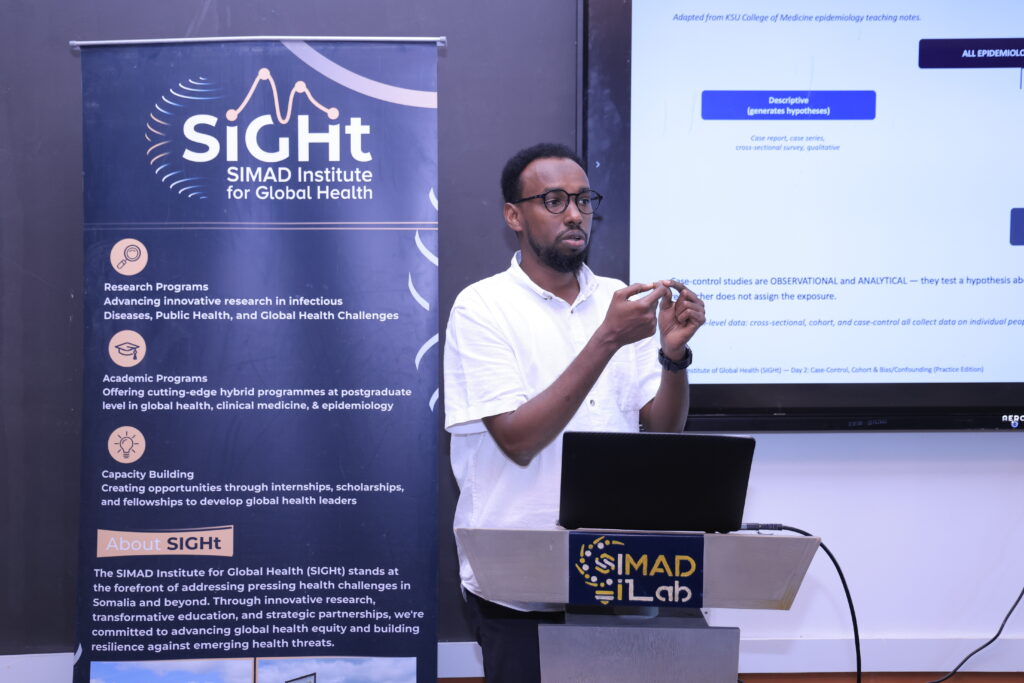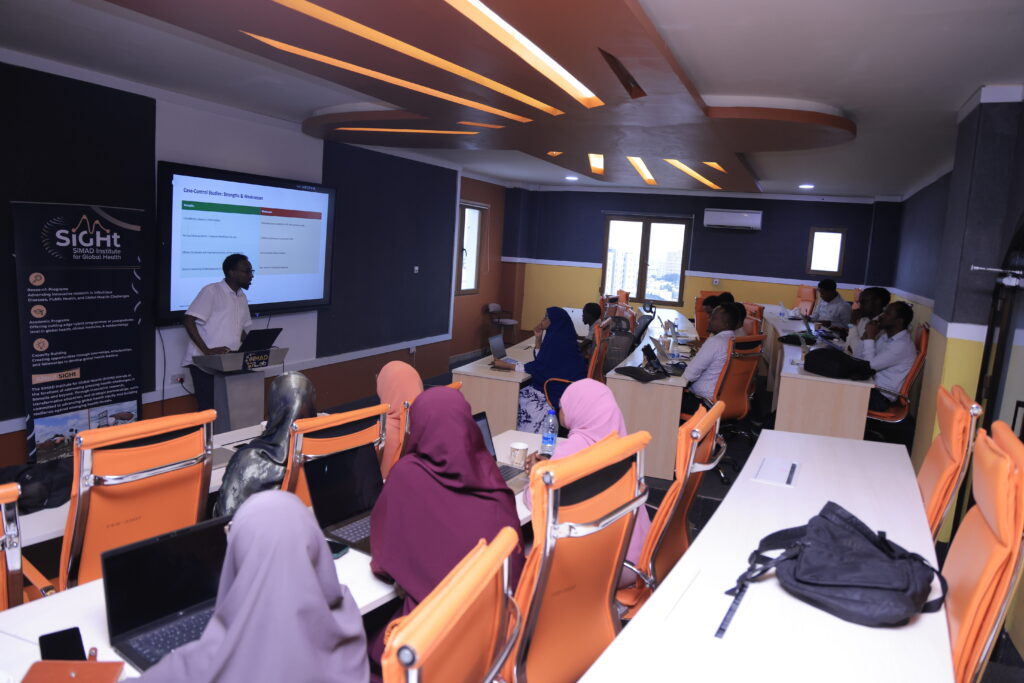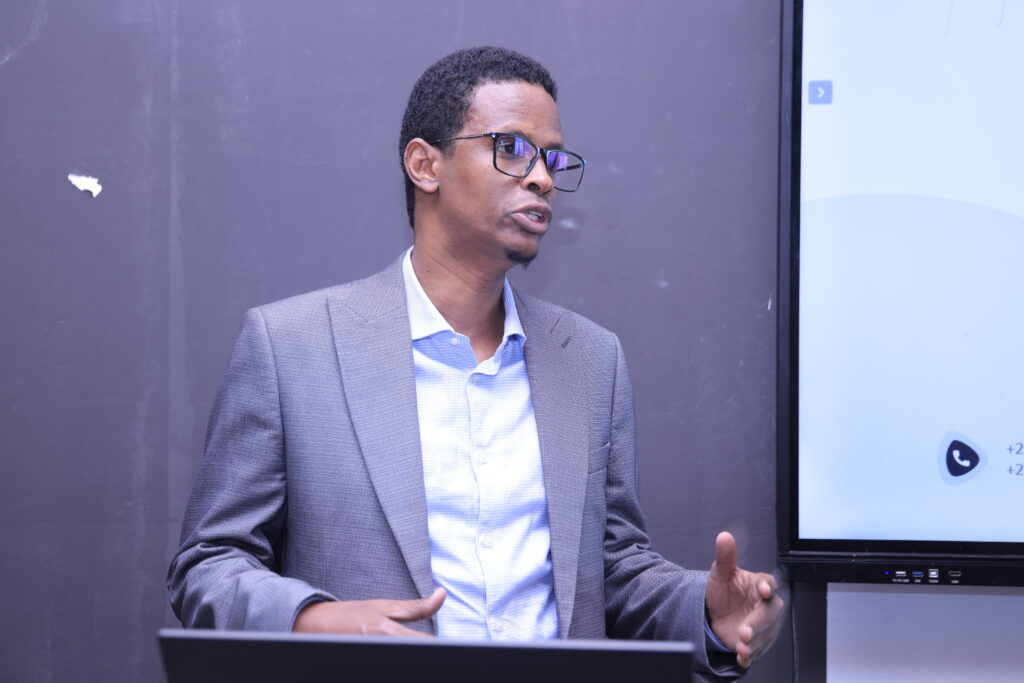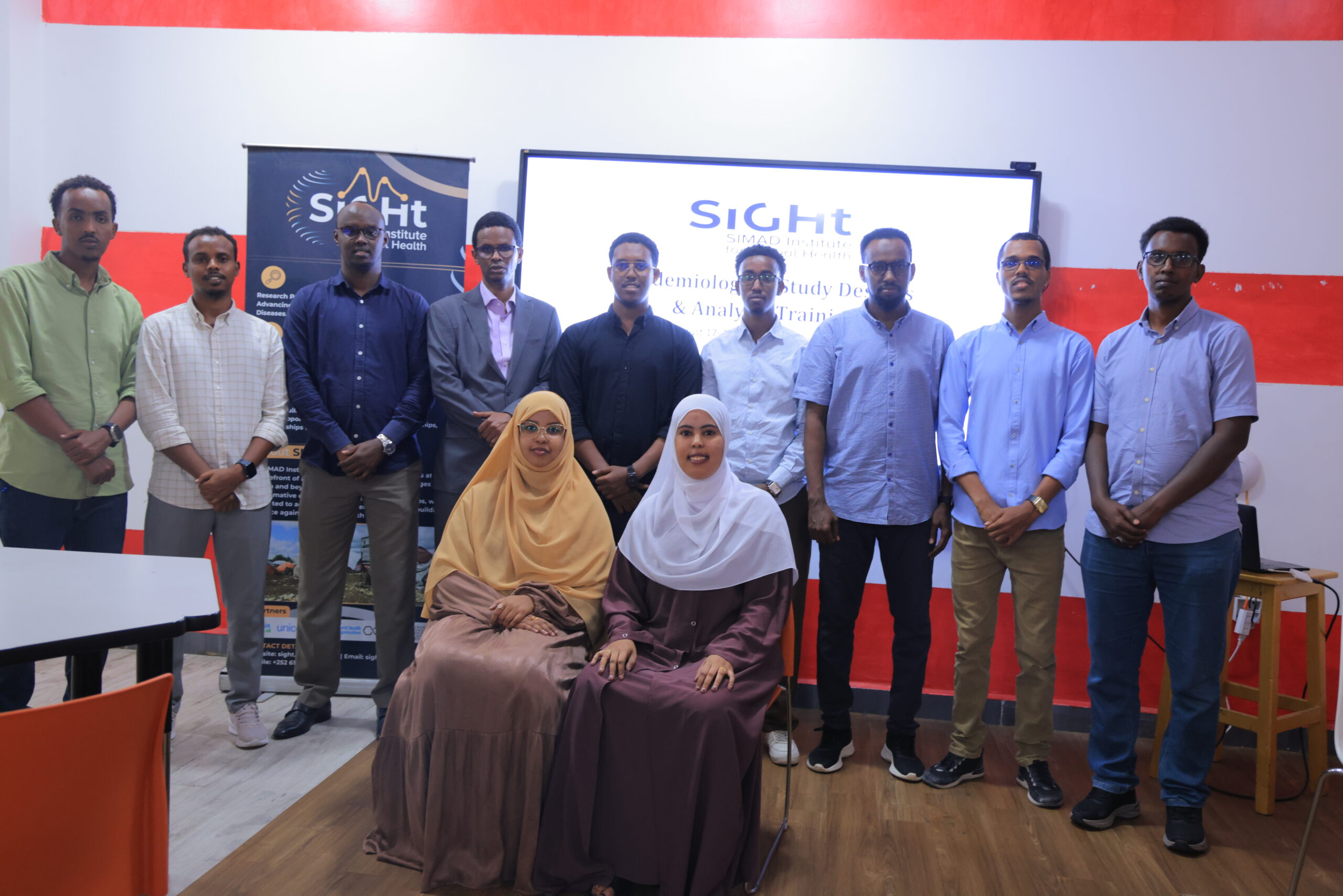

SIGHt trained nearly 30 academic staff and healthcare professionals from FMHS and Sumait Hospital in the design, analysis and critical appraisal of epidemiological studies.
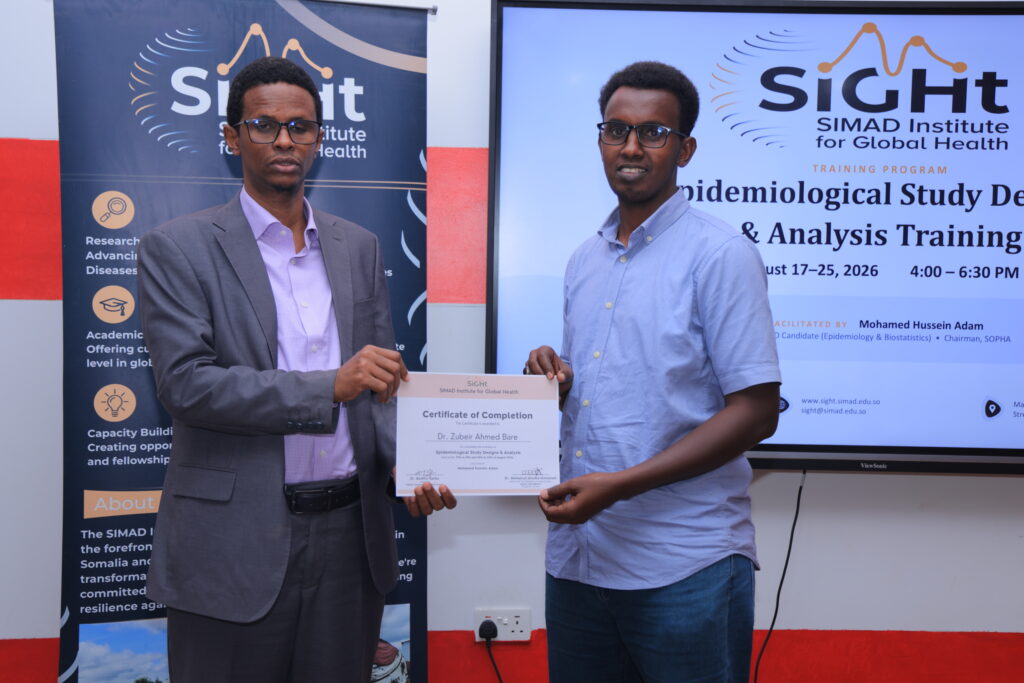
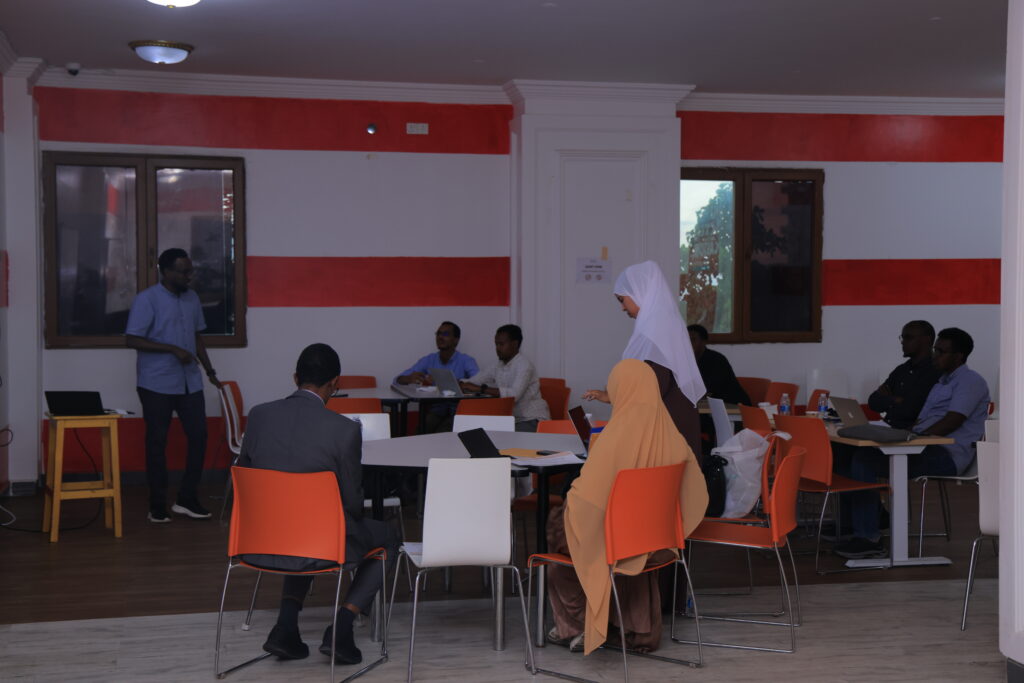
The SIMAD Institute for Global Health (SIGHt) successfully held a five-day, hands-on training on the Design and Analysis of Epidemiological Studies as part of its research capacity-building programme. The training took place at SIMAD University’s Town Campus in two sessions, on 17–19 and 24–25 August 2026.
It brought together nearly 30 participants: academic staff from SIMAD University’s Faculty of Medicine and Health Sciences (FMHS) and healthcare professionals from Sumait Hospital. Mr Mohamed Hussein Adam facilitated the training, which aimed to give participants the practical skills to design sound studies, analyse data correctly and judge the quality of research evidence.
Key areas covered
- Foundations of epidemiology: Participants explored the web of causation, the idea that most health outcomes have several interacting causes. They also learned to measure disease frequency using incidence (risk) in a population at risk and prevalence.
- Study designs: The training covered descriptive and analytic studies, then cross-sectional, case-control and cohort designs. It also covered experimental designs, including randomised controlled trials (RCTs) and quasi-experimental studies.
- Measures of association: Participants calculated and interpreted odds ratios, relative risks and prevalence ratios. They learned that these estimates should always be read together with their confidence intervals.
- Error, bias and confounding: Participants learned to distinguish random error from systematic error (bias) and to identify confounding factors. Worked examples on age-adjusted death rates showed that a clear difference between crude and adjusted estimates signals confounding.
- Effect modification and mediation: Participants learned how to tell confounders, effect modifiers and mediators apart, and why this matters when analysing data.
- Causal diagrams: Participants used directed acyclic graphs (DAGs) to map causal pathways and to decide which variables should be adjusted for.
- Sample size calculation: The training covered how to work out the sample size needed for surveys and for studies that compare groups.
- Stratified and multivariable analysis: Participants learned to use stratification and regression to control for confounding and to interpret adjusted estimates.
- Critical appraisal: Participants practised assessing the quality of published studies and discussed how evidence can inform health policy and practice.
A practical, locally relevant approach
The sessions combined interactive lectures with practical exercises in Microsoft Excel, Epi Info and OpenEpi. These free tools let participants apply the methods in resource-limited settings. Case studies were drawn from Somalia’s public health priorities, including infectious disease outbreaks, maternal and child health, and nutrition, so participants could relate each method to real challenges in their own research and clinical work.
Conclusion
Because academic and clinical staff trained together, the programme also strengthened collaboration between researchers and practitioners, which is essential for producing locally relevant evidence. The training reflects SIGHt’s continued commitment to building research capacity among its academic and clinical partners and to improving population health in Somalia. SIGHt will continue to offer capacity-building programmes that equip health professionals and researchers to generate high-quality evidence.
Because academic and clinical staff trained together, the programme also strengthened collaboration between researchers and practitioners, which is essential for producing locally relevant evidence. The training reflects SIGHt’s continued commitment to building research capacity among its academic and clinical partners and to improving population health in Somalia. SIGHt will continue to offer capacity-building programmes that equip health professionals and researchers to generate high-quality evidence.