

The SIMAD Institute for Global Health SIGHt, SIMAD University Somalia joins a five-year, £3.6 million study led by the London School of Hygiene & Tropical Medicine and will lead its work in south-central Somalia
Mogadishu, 10 October 2026: SIMAD University is a partner on “Quantitative epidemic risk assessment in humanitarian responses,” a new research project co-funded by UK Research and Innovation (UKRI), the Foreign, Commonwealth and Development Office (FCDO) and other UK government partners. The SIMAD Institute for Global Health (SIGHt) leads the university’s participation and the project’s work in Somalia.
Led by Professor Francesco Checchi of the London School of Hygiene & Tropical Medicine (LSHTM), the project was announced on 7 October 2026 as one of 18 projects supported by a new £54 million investment to tackle biosecurity threats, including emerging epidemics and antimicrobial resistance.
The challenge
Epidemics are disproportionately common in humanitarian crises. Overcrowding, malnutrition, poor water and sanitation, and disrupted health services all raise the risk. Around 300 million people need humanitarian assistance, about a third of them forcibly displaced, while humanitarian funding is falling.
Yet humanitarian organisations and local health authorities have no systematic way to assess and prioritise the risks posed by different epidemic-prone diseases. This project aims to fill that gap. It will estimate the likelihood and potential impact of epidemics such as cholera, measles, malaria and dengue in crisis settings, combining statistical, mathematical and geospatial modelling with local expertise. An interactive tool will help decisionmakers compare prevention options such as vaccination, water and sanitation, and vector control. All products will be co-designed with the humanitarian actors and health authorities who will use them.
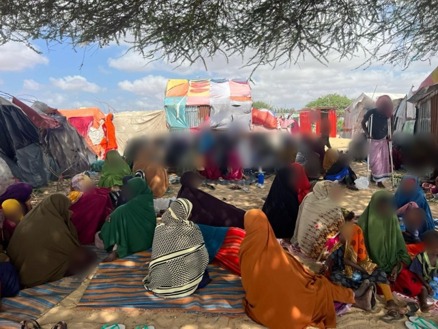
For Somalia, the relevance is direct. South-central Somalia is one of four study settings, alongside eastern Democratic Republic of Congo, Darfur in Sudan, and a fourth emergency yet to be identified. Recurrent displacement, drought and conflict there raise the risk of outbreaks. Clearer evidence on where and when epidemics are likely will help health authorities and humanitarian partners prepare and respond earlier.
SIMAD’s role
SIMAD Institute for Global Health (SIGHt) will lead the project in Somalia, with Dr. Bashiru Garba, Director of SIGHt, serving as international co-lead. The SIMAD team will convene local experts for participatory risk mapping, work with health authorities and humanitarian partners on engagement and data access and contribute to the modelling and to research on how epidemic-related decisions are made. The team will also draw on the climate and geospatial expertise of SIMAD’s Institute of Climate and Environment (ICE) under the leadership of Mr. Mohamed Okash, Director ICE.
Capacity strengthening is central to the project. SIMAD will recruit early-career researchers to be trained in epidemic modelling alongside partner scientists. The aim is that by the end of the project, researchers based in or near crisis-affected areas will lead epidemic risk assessments themselves.
The partnership
LSHTM leads the project. Other partners include the Catholic University of Bukavu (DRC), the Barcelona Supercomputing Centre and Epicentre, the epidemiology unit of Médecins Sans Frontières.
Read the full announcement from LSHTM: LSHTM humanitarian research among projects backed by UK government’s £54m investment in biosecurity
About the SIMAD Institute for Global Health (SIGHt)
The SIMAD Institute for Global Health (SIGHt) is the global health research and education institute of SIMAD University in Mogadishu, Somalia. Its work spans infectious diseases, mortality estimation in humanitarian settings, digital health, maternal health, pandemic preparedness, WASH and health systems, alongside postgraduate training and capacity building. For more information, visit sight.simad.edu.so or contact sight@simad.edu.so.
#GlobalHealth #EpidemicPreparedness #HumanitarianHealth #Somalia #UKRI #LSHTM